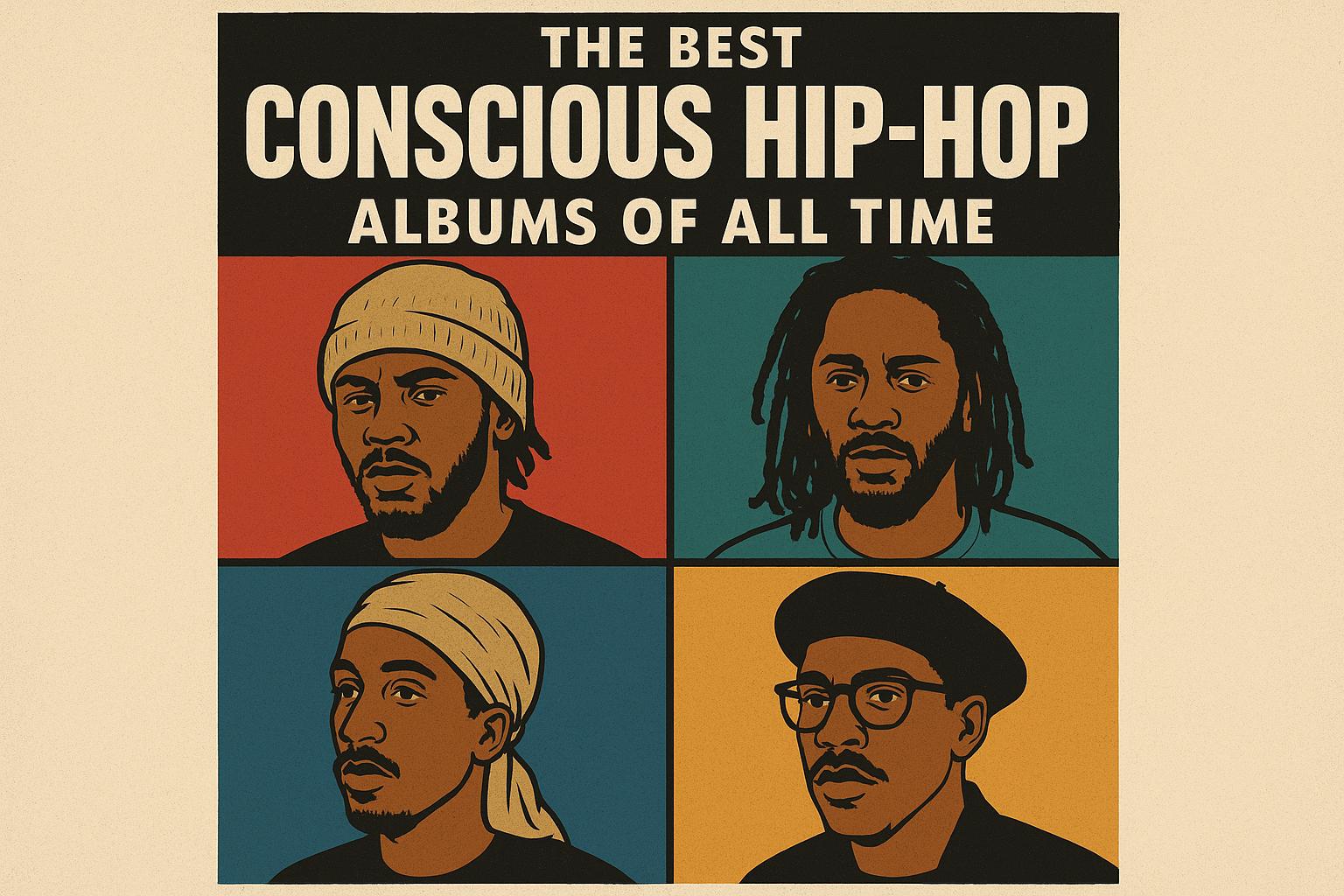
The Best Conscious Hip Hop Albums of All Time

The Best Conscious Hip Hop Albums of All Time

An Introduction to Conscious Hip Hop

Conscious hip hop distinguishes itself within the broader hip-hop genre through its focus on meaningful content and reflective messages. Musicians within this subgenre deliberately integrate themes related to social issues, culture, and self-awareness, aiming to enlighten listeners and motivate change through both their lyrics and music. Common topics often explored in conscious hip hop include poverty, politics, and systemic injustice, with the intent to shine light on these issues and stimulate societal transformation.

The evolution of conscious hip hop has carved a distinct niche in the music world, proving that hip hop can be more than mere entertainment; it can also serve as a form of social activism. The genre’s evolution has been propelled by several influential albums that not only broke new ground artistically but also helped redefine hip hop’s cultural role. Below, we delve into some of the most noteworthy conscious hip hop albums in history, examining the impact they had upon their release and continue to have today.

“It Takes a Nation of Millions to Hold Us Back” by Public Enemy

Released in 1988, Public Enemy’s It Takes a Nation of Millions to Hold Us Back is often heralded as a groundbreaking work in conscious rap and the larger hip-hop genre. This album stands out due to its bold, politically charged lyrics, coupled with innovative production techniques. With tracks like “Don’t Believe the Hype” and “Fight the Power,” Public Enemy effectively repurposed hip-hop as a platform for serious social activism.

The impact of this album cannot be overstated. It transformed how the media and public saw hip hop, moving the genre beyond its origins in street parties and dance to a medium capable of significant cultural critique. The Bomb Squad’s production techniques layered samples in complex, abrasive ways, challenging even the sonic landscape of hip hop. Public Enemy’s ability to address pertinent societal issues of the time with such energy and clarity helped inspire generations of artists to use their voices as instruments of change.

“The Miseducation of Lauryn Hill” by Lauryn Hill

Largely considered a landmark album, Lauryn Hill’s solo debut, The Miseducation of Lauryn Hill, arrived in 1998 as a genre-defying project that addresses themes of love, identity, and societal challenges. Blending hip hop, R&B, and soul, Hill’s album illustrates her versatility as an artist and depth as a lyricist. Tracks like “Doo Wop (That Thing)” and “To Zion” provide evocative insights into personal and collective struggles, making the album resonate on multiple levels with a wide audience.

Lauryn Hill’s approach in this album was unique—not only for its fusion of various musical forms but also for its heartfelt exploration of vulnerability, empowerment, and emotional complexity. The critical acclaim accorded to the album is evidence of its far-reaching influence, having sparked conversations about both the potential and responsibility of artists in speaking truth through their music. More than two decades after its release, The Miseducation of Lauryn Hill continues to be a reference point for soulful, conscious music.

“To Pimp a Butterfly” by Kendrick Lamar

Kendrick Lamar’s To Pimp a Butterfly, released in 2015, set a new benchmark for contemporary conscious hip hop. The album’s complex narrative and exploration of African American culture and identity is woven throughout with elements of jazz, funk, and spoken word. Songs like “Alright” have emerged as anthems for resilience and protest, embodying the spirit of perseverance in the face of adversity.

Kendrick Lamar has established himself as a formidable voice within conscious hip hop, largely due to his ability to blend compelling storytelling with profound insights. To Pimp a Butterfly interlaces introspection with broader social critique, making it both personal and universal. In doing so, Lamar communicates a palpable sense of urgency while encouraging listeners to reflect on societal issues and advocate for change through awareness and action.

“Black on Both Sides” by Mos Def

Released in 1999, Mos Def’s Black on Both Sides is regarded as a seminal work in the realm of conscious hip hop, known notably for its thought-provoking lyrics and eclectic sound. With tracks like “Mathematics” and “Umi Says,” Mos Def adroitly tackles issues such as racial identity and social inequality, while emphasizing the salience of knowledge and empowerment.

This album captures Mos Def’s unique approach to music-making, where he infuses tracks with a diverse set of influences ranging from reggae to blues while remaining rooted in hip-hop traditions. This multidimensional musical style is paired with lyrics that dissect systemic injustices and challenge listeners to question their role in society. Mos Def’s deliberate fusion of different styles and commitment to impactful lyrics endows Black on Both Sides with lasting relevance in the conscious hip hop landscape.

Conclusion

Conscious hip hop albums have played a critical role in shaping hip hop as a genre capable of powerful social commentary and activism. The albums discussed above represent some of the most influential works within this subgenre, each contributing to dialogues on pertinent societal issues with both depth and creativity. These works not only provide listeners with entertainment but also provoke reflection and inspire action through their artistry. This blend of art and activism continues to drive conscious hip hop, asserting its place as both a cultural and social force. As society evolves, conscious hip hop remains a vital means of expressing and addressing the complexities of contemporary life.
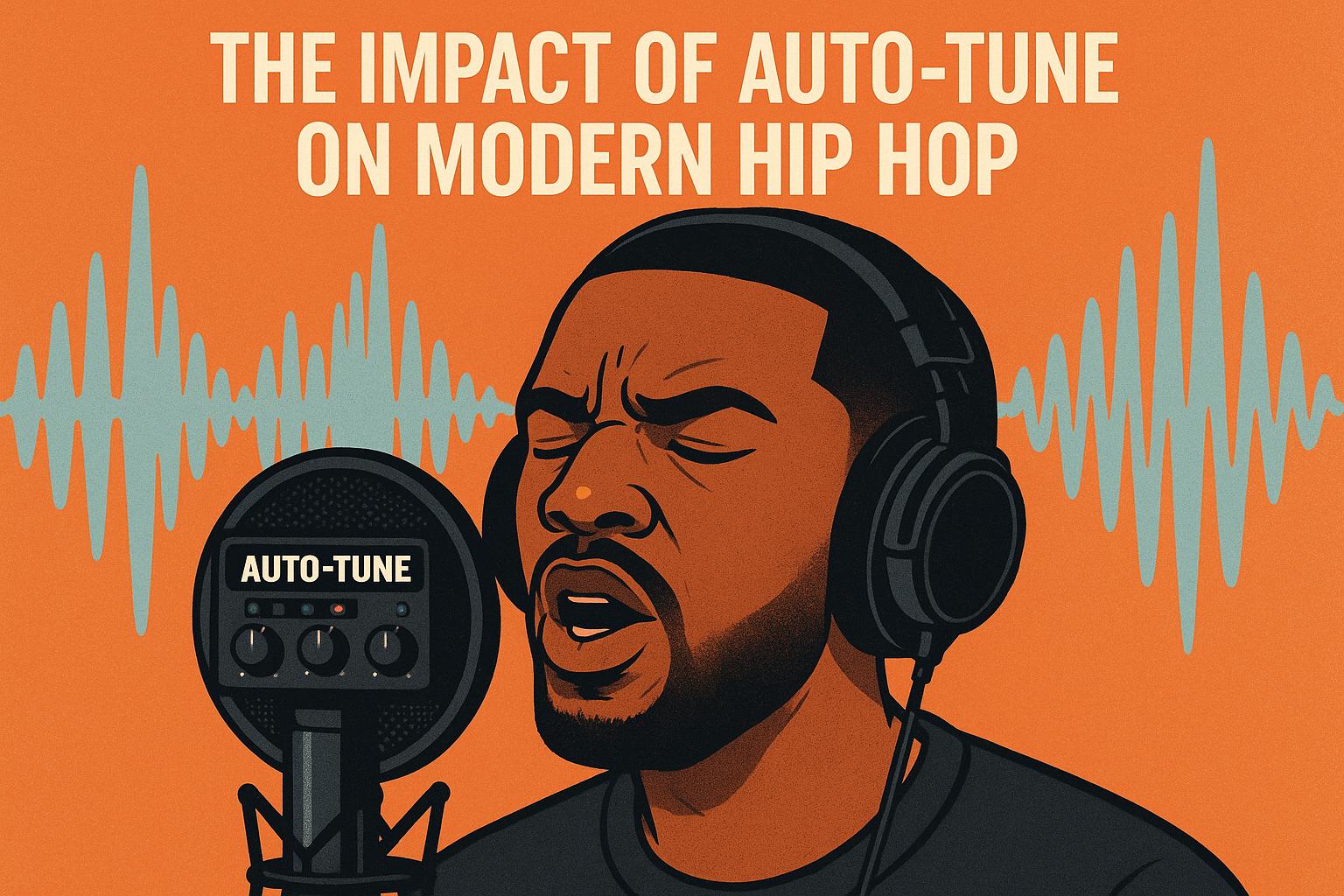
The Impact of Auto-Tune on Modern Hip Hop

The Impact of Auto-Tune on Modern Hip Hop

The Introduction of Auto-Tune in Hip Hop

Auto-Tune, a pitch correction software initially developed by Antares Audio Technologies, was first introduced in 1997. Originally intended to correct off-key inaccuracies in vocal performances, it has since become a ubiquitous tool in modern music production. In the realm of hip hop, Auto-Tune has not only altered the sound of the genre but also influenced its creative directions.

The Technology Behind Auto-Tune

Auto-Tune’s functionality is based on its ability to analyze the pitch of audio input and adjust it to match the nearest true semitone. This core feature allows music producers and artists to refine and perfect vocal and instrumental performances with a level of precision that was previously challenging to achieve. Over the years, the software has evolved significantly, incorporating advanced features that have broadened its application far beyond basic pitch correction. This technological evolution has paved the way for a wide range of creative uses, from subtle enhancements of vocal tracks to the creation of distinct, dramatic vocal effects that have become a hallmark of specific musical styles.

The underlying algorithm of Auto-Tune employs techniques such as phase vocoder technology and digital signal processing to achieve its pitch correction objectives. By analyzing the sound wave of the input signal, Auto-Tune swiftly computes the difference between the input pitch and the nearest desired pitch, making real-time adjustments that are integrated seamlessly into the audio output. This process has been refined over subsequent software iterations, allowing for even more granular control over pitch correction parameters.

Early Adopters and Popularization

Auto-Tune first captured widespread public attention in the world of pop music with Cher’s 1998 hit “Believe,” which remarkably utilized the effect to create a novel and immediately recognizable sound. However, within the context of hip hop, its journey toward mainstream acceptance was most prominently championed by artists who saw the potential to redefine the auditory landscape of their music.

Artists such as T-Pain were pivotal in the embrace and popularization of Auto-Tune within hip hop during the mid-2000s. T-Pain’s distinctive style, largely characterized by the heavy and deliberate application of Auto-Tune, became both an artistic signature and a defining feature of his musical identity. His influence was profound, prompting many artists within the genre to experiment with Auto-Tune and explore its potential for crafting new sounds and effects.

Following T-Pain’s success, numerous hip hop artists began to integrate Auto-Tune into their production techniques. Its versatility allowed artists to experiment with novel vocal textures, paving the way for a new era of melodic hip hop that blurred traditional distinctions between singing and rapping. This phenomenon led to a broader exploration of melodic rap, where artists could express complex emotions and narratives through innovative vocal arrangements.

Artistic Impact on Hip Hop

The integration of Auto-Tune in hip hop has contributed to a significant transformation in the genre’s aesthetic and production methodologies. Artists now possess the flexibility to experiment with vocal textures and explore complex melodic structures that were challenging to achieve before the advent of Auto-Tune. This capability has catalyzed a resurgence of melodic rap styles, giving rise to new approaches that seamlessly blend elements of singing and rapping, further expanding the expressive range of hip hop music.

Evolution of Style: The influence of Auto-Tune is particularly evident in the work of artists such as Kanye West, Lil Wayne, and Drake. These artists have strategically incorporated Auto-Tune into their sound to establish a distinct auditory identity. By experimenting with pitch correction and vocal modification, they have innovated and distinguished their musical style, inspiring an entire generation of hip hop artists in the process.

This evolution of style has repositioned the role of vocals in hip hop, allowing artists to craft intricate melodic compositions and articulate their ideas through a dynamic fusion of rhythm and melody. As the boundaries between traditional singing and rapping continue to blur, Auto-Tune has emerged as an indispensable tool for redefining the vocal possibilities within modern hip hop.

The Controversy Surrounding Auto-Tune’s Usage

While Auto-Tune has unlocked new avenues for creative expression, its usage has not been without controversy. Critics have voiced concerns about the perceived artificiality introduced by heavy reliance on pitch correction. They argue that excessive use of Auto-Tune can detract from the raw authenticity and emotive power traditionally associated with vocal performances, dampening the natural talent and skill that are celebrated in hip hop artistry.

The Debate: The debate surrounding Auto-Tune’s use in hip hop extends beyond aesthetic considerations, delving into broader discussions about the impact of technology on musical authenticity. Purists contend that the extensive application of Auto-Tune poses a challenge to the foundational principles of hip hop, as it may obscure the artist’s true vocal abilities. They express concerns that the reliance on technology could overshadow the skill and craftsmanship that are fundamental to the genre.

Conversely, proponents of Auto-Tune argue that the software democratizes music-making, rendering it more accessible and enabling artistic innovation. By facilitating experimentation and allowing artists to achieve new sonic textures, Auto-Tune has played a pivotal role in reshaping hip hop’s sonic landscape and expanding the boundaries of creative expression.

Conclusion

The impact of Auto-Tune on modern hip hop is both undeniable and multifaceted. As a tool, it has simultaneously challenged and broadened the boundaries of artistic expression within the genre, offering artists new possibilities to redefine their sound and explore innovative musical directions. Whether regarded as a groundbreaking innovation that democratizes music production or as a controversial crutch that detracts from artistic authenticity, Auto-Tune remains an integral component of the contemporary hip hop soundscape.

The ongoing dialogue surrounding Auto-Tune reflects a dynamic interplay between tradition and technology in music, underscoring the evolving nature of hip hop as it continues to adapt to new challenges and opportunities. As artists and producers navigate the complexities of integrating digital effects into their work, Auto-Tune represents a powerful testament to the transformative potential of technology in shaping the future of music.

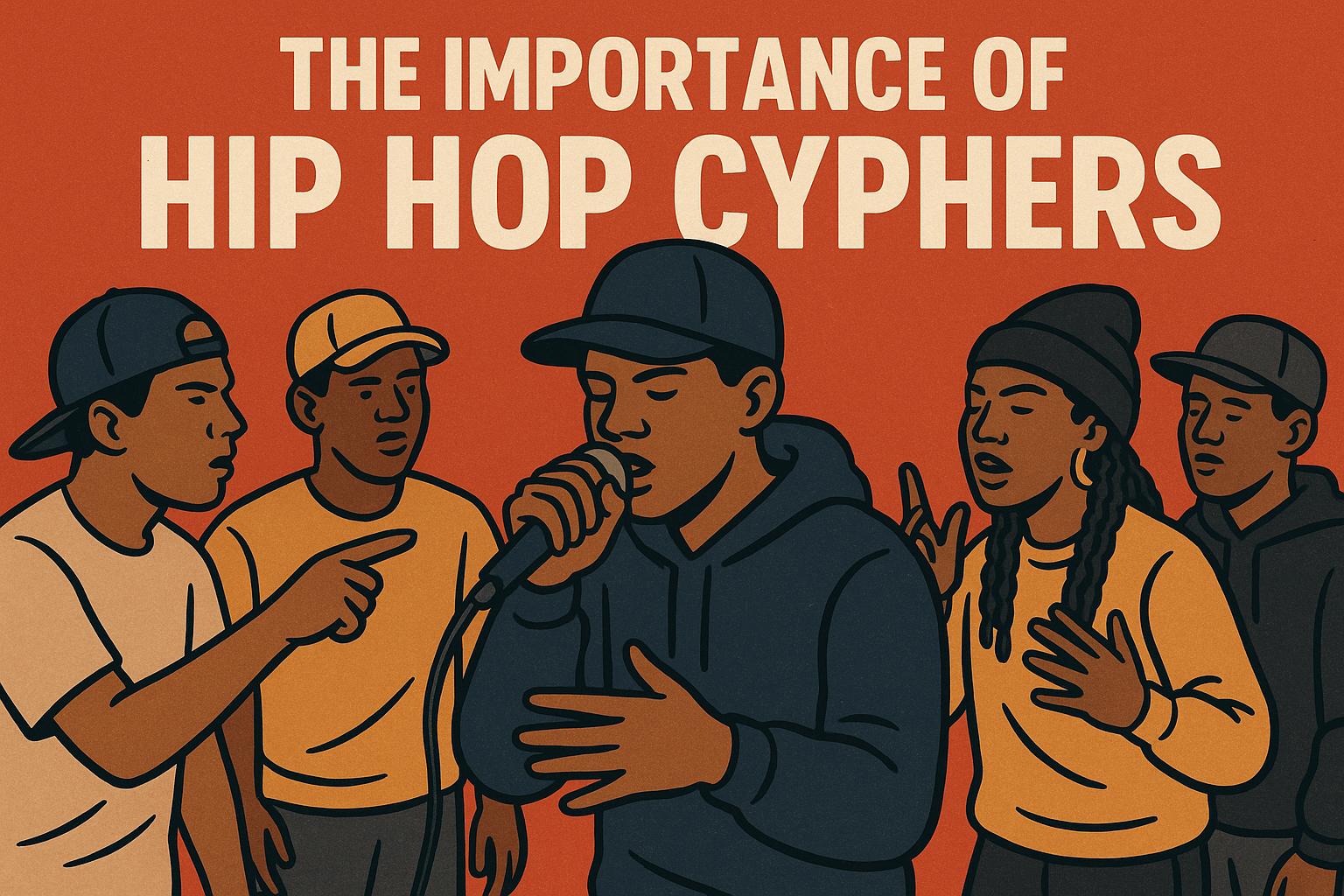
The Importance of Hip Hop Cyphers

The Importance of Hip Hop Cyphers

The Role of Cyphers in Hip Hop Culture

In the realm of hip hop, cyphers hold a significant place. These informal gatherings of rappers, which often feature freestyle rapping in a circle, have become integral to the culture. Cyphers are not only a training ground for emerging artists but also a platform for established names to showcase their improvisational skills. As we delve deeper into the essence of cyphers, we observe their multifaceted nature and their profound impact on hip hop culture over the decades.

Historical Context

The origins of cyphers can be traced back to the early days of hip hop in the 1970s and 1980s. During this period, gatherings in parks and on street corners were common where individuals would display their lyrical prowess. These sessions were foundational in pushing the limits of creativity and contributed to the communal and competitive spirit of hip hop. This era was characterized by an embrace of innovation, allowing young artists to experiment with rhythm and lyrics in an organic setting. The impromptu nature of these gatherings highlighted the dynamic essence of hip hop, showcasing an art form constantly in flux and responsive to its surroundings.

Skills Development

Cyphers are instrumental in honing an artist’s freestyle skills. Since the sessions require spontaneous composition, participants are encouraged to think quickly and creatively while navigating complex rhythms. This skill is crucial for differentiating oneself in the competitive landscape of hip hop. Many renowned artists, such as Jay Z and Eminem, have praised cyphers for providing the platform that helped refine their artistry. The ability to think on one’s feet and produce coherent, powerful verses is a testament to an artist’s prowess. This process of continuous refinement and adaptation cultivates resilience, pushing artists to perfect their craft in novel ways that resonate with both niche and mainstream audiences.

Community and Collaboration

A key element of cyphers is their ability to foster community and collaboration. By bringing together both seasoned and aspiring rappers, these gatherings create opportunities for mentorship and peer learning. This environment of collaboration often results in dynamic performances and innovative approaches to music. Artists come together, each bringing a unique style and perspective, and it is within this confluence that new trends and subgenres are born. The shared experience of a cypher can break down barriers, creating bonds that extend beyond music into broader community interactions. Relationships forged in these circles often lead to enduring partnerships both in and outside the studio.

Form of Expression

Moreover, cyphers serve as a powerful tool for social commentary and personal expression. Artists frequently use the platform to address social issues, personal experiences, and cultural narratives. This aspect of cyphers underscores the broader significance of hip hop as a voice for marginalized communities and a medium for storytelling. The lyrical content of cyphers often mirrors societal challenges, from politics to personal strife, while tackling issues like racial inequality, poverty, and identity. By doing so, cyphers elevate hip hop’s role in cultural discourse, turning raw experiences into compelling narratives that demand attention and provoke thought.

Popularity and Modern Incarnations

In contemporary settings, cyphers have evolved with the advent of digital media. Platforms such as YouTube and social media have made it easier for artists to gain visibility and share their cyphers with a global audience. Events like the BET Hip Hop Awards Cypher have further popularized this art form by showcasing notable artists in televised sessions. Through the internet, cyphers have transcended geographic boundaries, allowing access to a diverse array of styles and influences. This digital transformation has democratized the art form, enabling anyone with a passion for hip hop to participate and contribute to the global dialogue.

The Evolution of Cyphers

While the essence of cyphers remains rooted in tradition, their evolution is marked by various adaptations influenced by changing times. The early street gatherings have now expanded into structured events within competitive spheres and educational workshops. These adaptations reflect the flexibility and resilience of the hip hop community in responding to external influences while retaining core values. Institutions and schools have incorporated cyphers into educational frameworks, emphasizing the role of hip hop in cultural literacy and linguistic development. This formal recognition reinforces the legitimacy of hip hop as an influential art form with academic merit.

Technology’s Impact

Technology’s role in shaping modern cyphers cannot be understated. Beyond social media, advancements in recording equipment and software have empowered artists to produce high-quality work from virtually any location. This democratization has ushered in a new wave of performers, eager to carve their niche in the competitive world of hip hop. With virtual reality and augmented reality experiences on the horizon, the potential for immersive cypher experiences remains vast, promising new dimensions of engagement for artists and audiences alike.

Conclusion

In conclusion, hip hop cyphers have been a vital component of the genre since its inception. They provide a space for skill development, foster community, and offer a means of expression. As the culture continues to evolve, cyphers remain a cornerstone of hip hop, demonstrating the enduring relevance of this iconic cultural practice. Cyphers represent the heart of hip hop’s innovative spirit, uniting artists across generations to celebrate and contribute to a globally influential art form. As technology and cultural contexts evolve, cyphers will undoubtedly continue to adapt, continually shaping the future of hip hop and its role in society.

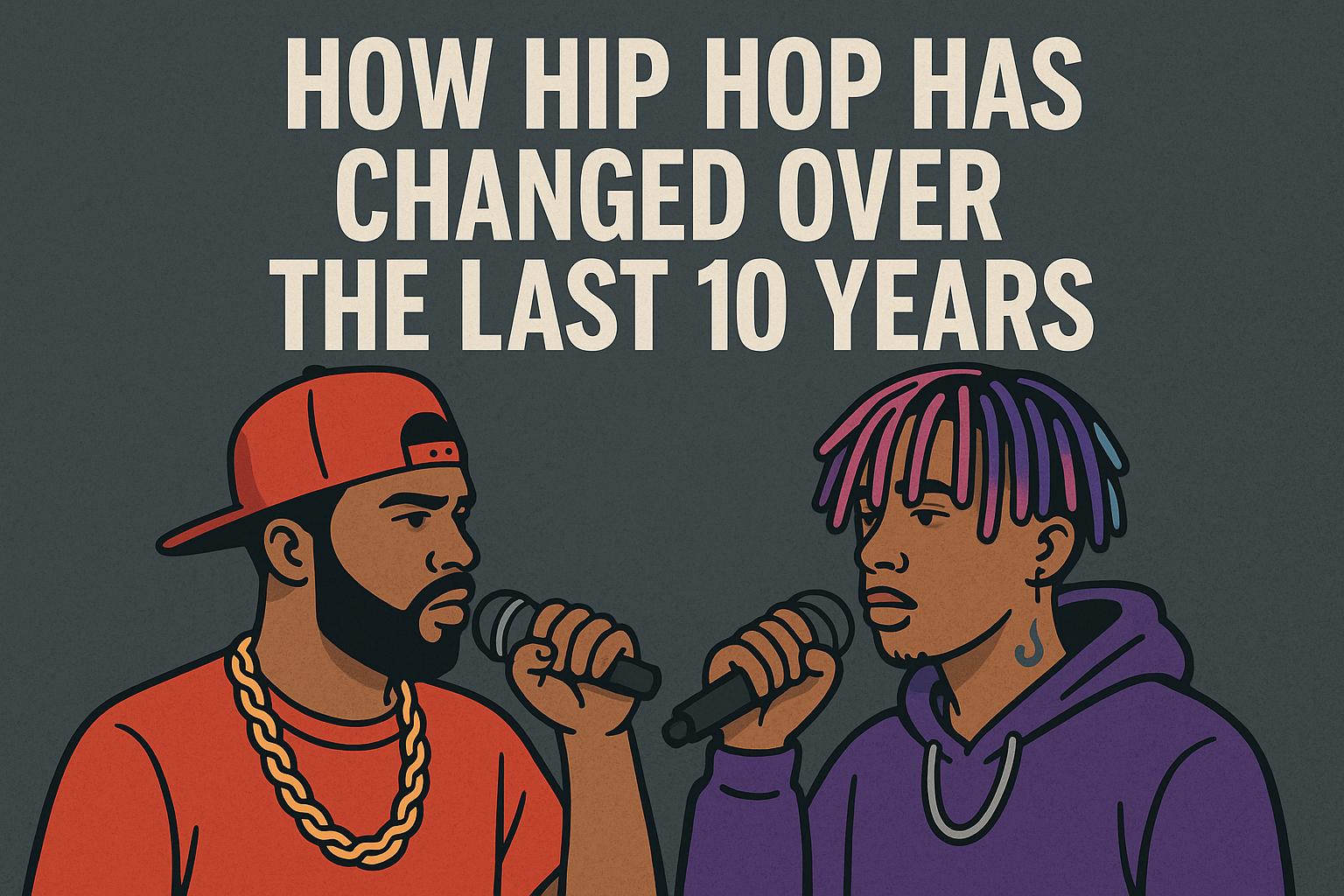
How Hip Hop Has Changed Over the Last 10 Years

How Hip Hop Has Changed Over the Last 10 Years

The Evolution of Hip Hop (2013-2023)

Over the last decade, hip hop has undergone significant transformations, reflecting broader cultural shifts and technological advancements. This dynamic genre has continuously adapted, influencing and being influenced by other music styles while expanding its global reach. The evolution of hip hop from 2013 to 2023 represents a fascinating journey marked by the rise of digital technology, shifts in lyrical themes, and cultural globalization.

The Rise of Streaming Platforms

One of the most prominent changes in hip hop during this period has been the rise of streaming platforms. Services such as Spotify and Apple Music have revolutionized how artists distribute their music and how fans access it. Before this era, radio play and CD sales dominated the music industry. Artists had to rely heavily on record labels to get their music heard by a wide audience. The introduction and massive adoption of streaming services provided new opportunities for hip hop artists.

With streaming, artists can now release music directly to a global audience, bypassing traditional channels and gaining immediate feedback from listeners. The accessibility of these platforms has also lowered the barrier for entry, encouraging a surge of new artists who can share their work without needing a record deal. These services not only allowed current listeners to discover new music easily but also helped old tracks gain renewed popularity, reaching generations that were not initially their target audience. This change has democratized the music industry, as data analytics offered by streaming platforms give artists insights into their listener demographics and geographical reach, enabling smarter strategic decisions.

The Influence of Social Media

Social media’s influence in hip hop over the past decade is undeniable. Platforms like Instagram and TikTok have transformed how musicians engage with their audiences. Artists can share snippets of their music, tease upcoming releases, and give fans a glimpse into their personal lives. This direct engagement helps build stronger connections and a more engaged fanbase. The shift towards digital interaction has democratized the marketing process, allowing independent artists to gain visibility and grow substantial followings without major label backing. Notably, TikTok has been particularly influential in the creation of viral trends, significantly impacting which tracks gain overnight success and dominate the charts.

Moreover, social media has provided a platform for artists to interact with their followers in real-time, further strengthening the artist-fan relationship. This heightened connectivity extends beyond promotion, as it allows fans to become part of the creative process. They can offer feedback, participate in challenges, and help shape an artist’s direction. The communal nature of social media interactions has resulted in music releases feeling like shared experiences and has played a crucial role in the emergence of indie artists who use these platforms as their primary means of gaining recognition.

Diversification of Lyrical Themes

Lyrical content in hip hop has diversified remarkably over the past decade. While traditional themes like wealth, street life, and personal struggles remain prevalent, there has been a noticeable shift towards more introspective and varied topics. More artists are using their platforms to address issues such as mental health, social justice, and personal empowerment. This broadening of themes allows hip hop to resonate with a larger audience, reflecting societal changes and the growing openness to discuss topics once considered taboo.

The focus on mental health has particularly grown, with artists openly discussing anxiety, depression, and the pressures of fame. This authenticity in lyrics has struck a chord with many, providing solace and understanding to listeners who may face similar challenges. Additionally, the genre has expanded its narrative potential by incorporating stories of resilience and hope, encouraging personal growth and self-awareness among its audience.

Emergence of Subgenres

The last decade has witnessed the emergence of numerous hip hop subgenres, each carving a niche within the broader genre. Trap music, characterized by its heavy bass, hi-hat sounds, and rapid-fire lyrical delivery, has dominated the charts. Artists such as Future, Travis Scott, and Migos have been at the forefront of this movement. Meanwhile, the lo-fi, atmospheric aesthetic of Cloud Rap and the genre-blending tendencies of Emo Rap have emerged, each attracting dedicated fanbases.

These subgenres have not only expanded hip hop’s sound palette but also influenced mainstream music production styles. The experimental nature of these subgenres has allowed artists to break conventions and infuse elements from various genres, such as rock, electronica, and indie, blurring traditional genre boundaries. This fusion of sounds has not only broadened audiences’ musical tastes but also spurred collaborations between hip hop artists and musicians from different backgrounds, creating innovative and unique musical experiences.

Globalization of Hip Hop

Hip hop is no longer an exclusively American phenomenon; it has matured into a global, multicultural movement. Artists from Latin America, Asia, and Africa have contributed their cultural influences to the genre, adding distinct flavors to its evolution. This influence broadens the appeal of hip hop by integrating diverse musical elements, such as traditional instruments, rhythms, and languages.

K-pop group BTS and Afrobeat artist Burna Boy showcase the combination of hip hop elements with local styles to create new sounds that captivate international audiences. This cross-cultural influence is driven by the widespread availability of music and the growing accessibility brought by digital technology. Hip hop’s global expansion signifies the genre’s relevance across borders, reflecting shared experiences and narratives that resonate with listeners worldwide.

In conclusion, the landscape of hip hop from 2013 to 2023 highlights a genre in constant flux. With technological advancements, social media influence, and globalization, hip hop continues to evolve and maintain its relevance in the ever-changing music industry. This constant evolution ensures that hip hop remains a powerful platform for artistic expression and cultural dialogue on a global scale.