

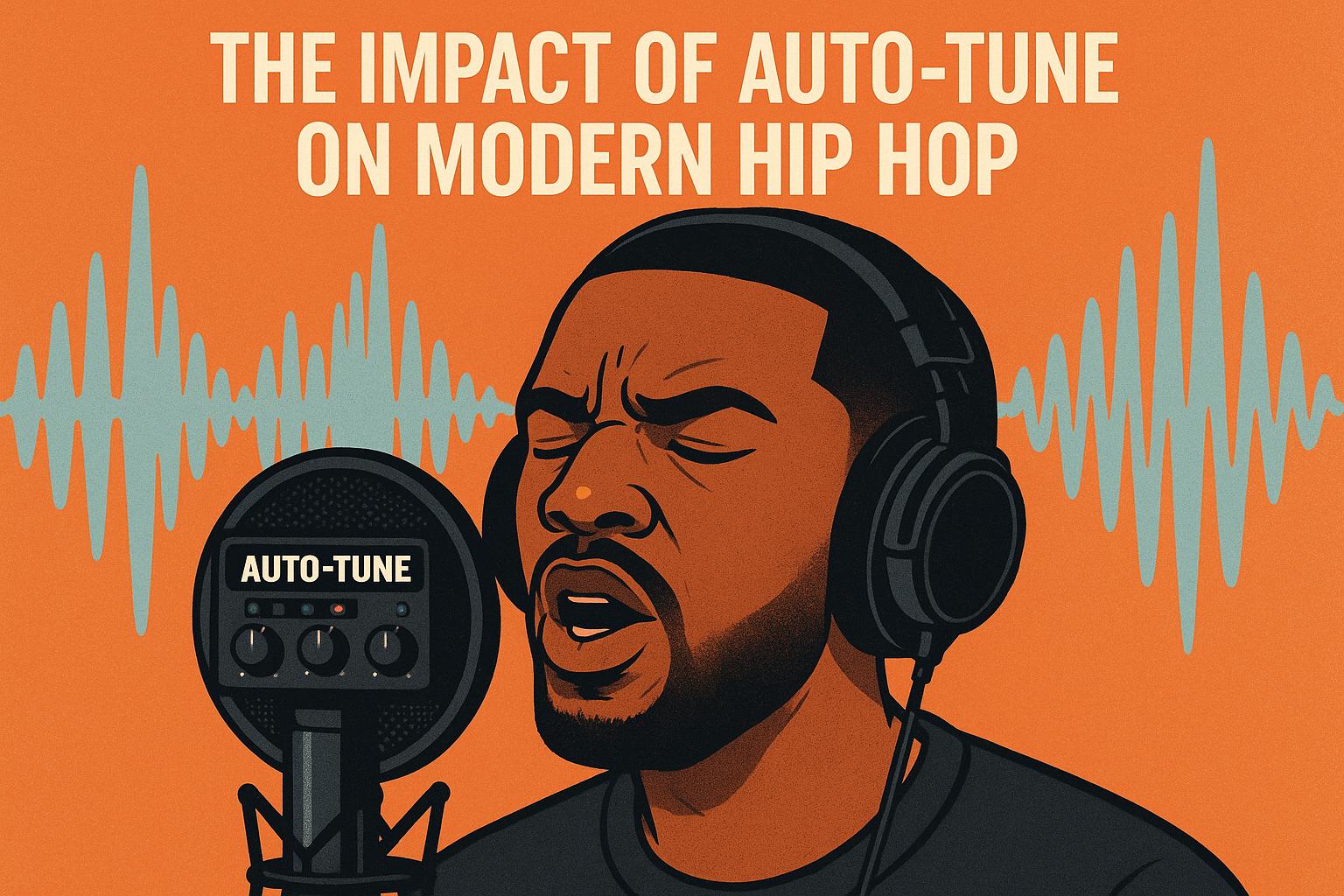
The Introduction of Auto-Tune in Hip Hop
Auto-Tune, a pitch correction software initially developed by Antares Audio Technologies, was first introduced in 1997. Originally intended to correct off-key inaccuracies in vocal performances, it has since become a ubiquitous tool in modern music production. In the realm of hip hop, Auto-Tune has not only altered the sound of the genre but also influenced its creative directions.
The Technology Behind Auto-Tune
Auto-Tune’s functionality is based on its ability to analyze the pitch of audio input and adjust it to match the nearest true semitone. This core feature allows music producers and artists to refine and perfect vocal and instrumental performances with a level of precision that was previously challenging to achieve. Over the years, the software has evolved significantly, incorporating advanced features that have broadened its application far beyond basic pitch correction. This technological evolution has paved the way for a wide range of creative uses, from subtle enhancements of vocal tracks to the creation of distinct, dramatic vocal effects that have become a hallmark of specific musical styles.
The underlying algorithm of Auto-Tune employs techniques such as phase vocoder technology and digital signal processing to achieve its pitch correction objectives. By analyzing the sound wave of the input signal, Auto-Tune swiftly computes the difference between the input pitch and the nearest desired pitch, making real-time adjustments that are integrated seamlessly into the audio output. This process has been refined over subsequent software iterations, allowing for even more granular control over pitch correction parameters.
Early Adopters and Popularization
Auto-Tune first captured widespread public attention in the world of pop music with Cher’s 1998 hit “Believe,” which remarkably utilized the effect to create a novel and immediately recognizable sound. However, within the context of hip hop, its journey toward mainstream acceptance was most prominently championed by artists who saw the potential to redefine the auditory landscape of their music.
Artists such as T-Pain were pivotal in the embrace and popularization of Auto-Tune within hip hop during the mid-2000s. T-Pain’s distinctive style, largely characterized by the heavy and deliberate application of Auto-Tune, became both an artistic signature and a defining feature of his musical identity. His influence was profound, prompting many artists within the genre to experiment with Auto-Tune and explore its potential for crafting new sounds and effects.
Following T-Pain’s success, numerous hip hop artists began to integrate Auto-Tune into their production techniques. Its versatility allowed artists to experiment with novel vocal textures, paving the way for a new era of melodic hip hop that blurred traditional distinctions between singing and rapping. This phenomenon led to a broader exploration of melodic rap, where artists could express complex emotions and narratives through innovative vocal arrangements.
Artistic Impact on Hip Hop
The integration of Auto-Tune in hip hop has contributed to a significant transformation in the genre’s aesthetic and production methodologies. Artists now possess the flexibility to experiment with vocal textures and explore complex melodic structures that were challenging to achieve before the advent of Auto-Tune. This capability has catalyzed a resurgence of melodic rap styles, giving rise to new approaches that seamlessly blend elements of singing and rapping, further expanding the expressive range of hip hop music.
Evolution of Style: The influence of Auto-Tune is particularly evident in the work of artists such as Kanye West, Lil Wayne, and Drake. These artists have strategically incorporated Auto-Tune into their sound to establish a distinct auditory identity. By experimenting with pitch correction and vocal modification, they have innovated and distinguished their musical style, inspiring an entire generation of hip hop artists in the process.
This evolution of style has repositioned the role of vocals in hip hop, allowing artists to craft intricate melodic compositions and articulate their ideas through a dynamic fusion of rhythm and melody. As the boundaries between traditional singing and rapping continue to blur, Auto-Tune has emerged as an indispensable tool for redefining the vocal possibilities within modern hip hop.
The Controversy Surrounding Auto-Tune’s Usage
While Auto-Tune has unlocked new avenues for creative expression, its usage has not been without controversy. Critics have voiced concerns about the perceived artificiality introduced by heavy reliance on pitch correction. They argue that excessive use of Auto-Tune can detract from the raw authenticity and emotive power traditionally associated with vocal performances, dampening the natural talent and skill that are celebrated in hip hop artistry.
The Debate: The debate surrounding Auto-Tune’s use in hip hop extends beyond aesthetic considerations, delving into broader discussions about the impact of technology on musical authenticity. Purists contend that the extensive application of Auto-Tune poses a challenge to the foundational principles of hip hop, as it may obscure the artist’s true vocal abilities. They express concerns that the reliance on technology could overshadow the skill and craftsmanship that are fundamental to the genre.
Conversely, proponents of Auto-Tune argue that the software democratizes music-making, rendering it more accessible and enabling artistic innovation. By facilitating experimentation and allowing artists to achieve new sonic textures, Auto-Tune has played a pivotal role in reshaping hip hop’s sonic landscape and expanding the boundaries of creative expression.
Conclusion
The impact of Auto-Tune on modern hip hop is both undeniable and multifaceted. As a tool, it has simultaneously challenged and broadened the boundaries of artistic expression within the genre, offering artists new possibilities to redefine their sound and explore innovative musical directions. Whether regarded as a groundbreaking innovation that democratizes music production or as a controversial crutch that detracts from artistic authenticity, Auto-Tune remains an integral component of the contemporary hip hop soundscape.
The ongoing dialogue surrounding Auto-Tune reflects a dynamic interplay between tradition and technology in music, underscoring the evolving nature of hip hop as it continues to adapt to new challenges and opportunities. As artists and producers navigate the complexities of integrating digital effects into their work, Auto-Tune represents a powerful testament to the transformative potential of technology in shaping the future of music.