

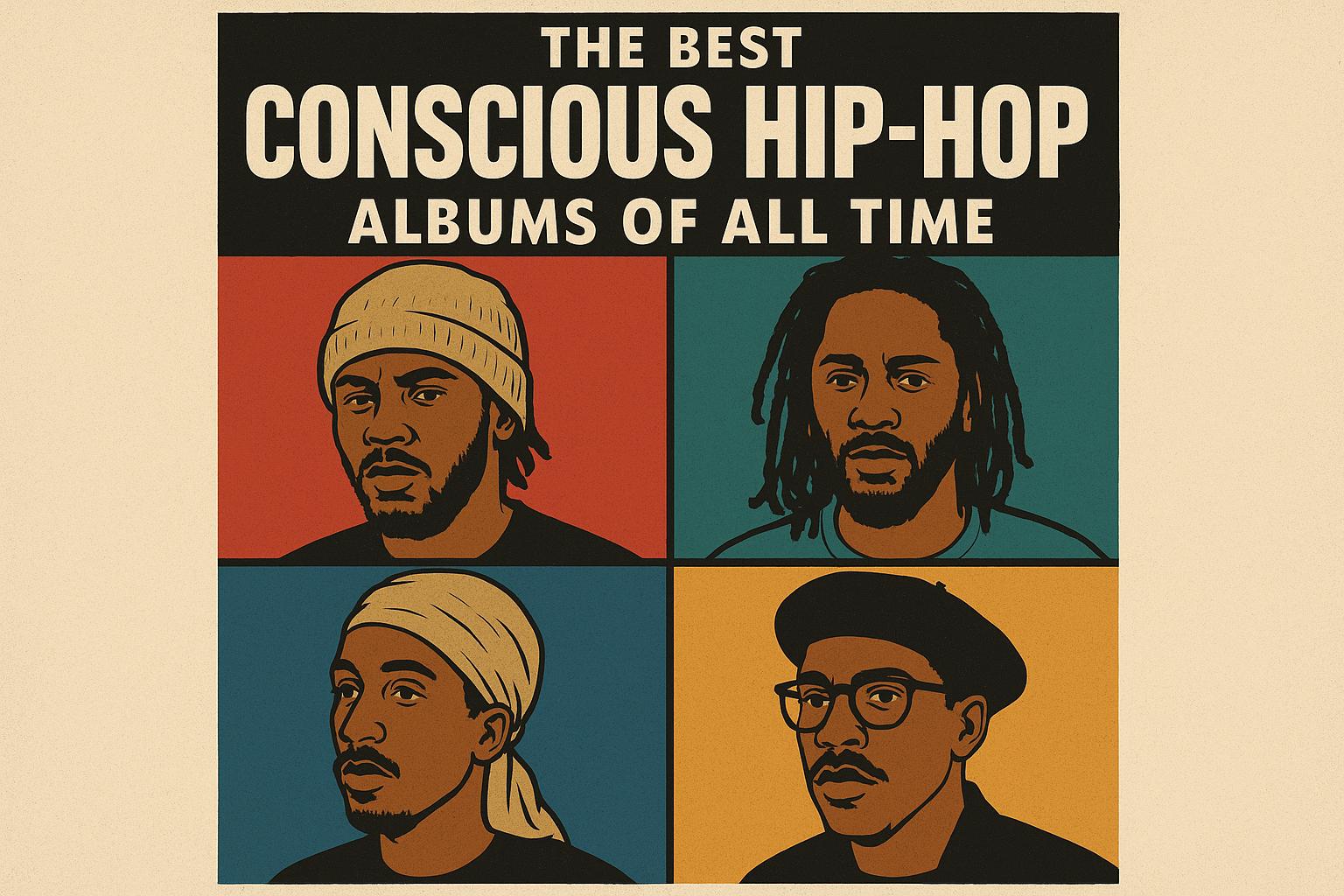
An Introduction to Conscious Hip Hop
Conscious hip hop distinguishes itself within the broader hip-hop genre through its focus on meaningful content and reflective messages. Musicians within this subgenre deliberately integrate themes related to social issues, culture, and self-awareness, aiming to enlighten listeners and motivate change through both their lyrics and music. Common topics often explored in conscious hip hop include poverty, politics, and systemic injustice, with the intent to shine light on these issues and stimulate societal transformation.
The evolution of conscious hip hop has carved a distinct niche in the music world, proving that hip hop can be more than mere entertainment; it can also serve as a form of social activism. The genre’s evolution has been propelled by several influential albums that not only broke new ground artistically but also helped redefine hip hop’s cultural role. Below, we delve into some of the most noteworthy conscious hip hop albums in history, examining the impact they had upon their release and continue to have today.
“It Takes a Nation of Millions to Hold Us Back” by Public Enemy
Released in 1988, Public Enemy’s It Takes a Nation of Millions to Hold Us Back is often heralded as a groundbreaking work in conscious rap and the larger hip-hop genre. This album stands out due to its bold, politically charged lyrics, coupled with innovative production techniques. With tracks like “Don’t Believe the Hype” and “Fight the Power,” Public Enemy effectively repurposed hip-hop as a platform for serious social activism.
The impact of this album cannot be overstated. It transformed how the media and public saw hip hop, moving the genre beyond its origins in street parties and dance to a medium capable of significant cultural critique. The Bomb Squad’s production techniques layered samples in complex, abrasive ways, challenging even the sonic landscape of hip hop. Public Enemy’s ability to address pertinent societal issues of the time with such energy and clarity helped inspire generations of artists to use their voices as instruments of change.
“The Miseducation of Lauryn Hill” by Lauryn Hill
Largely considered a landmark album, Lauryn Hill’s solo debut, The Miseducation of Lauryn Hill, arrived in 1998 as a genre-defying project that addresses themes of love, identity, and societal challenges. Blending hip hop, R&B, and soul, Hill’s album illustrates her versatility as an artist and depth as a lyricist. Tracks like “Doo Wop (That Thing)” and “To Zion” provide evocative insights into personal and collective struggles, making the album resonate on multiple levels with a wide audience.
Lauryn Hill’s approach in this album was unique—not only for its fusion of various musical forms but also for its heartfelt exploration of vulnerability, empowerment, and emotional complexity. The critical acclaim accorded to the album is evidence of its far-reaching influence, having sparked conversations about both the potential and responsibility of artists in speaking truth through their music. More than two decades after its release, The Miseducation of Lauryn Hill continues to be a reference point for soulful, conscious music.
“To Pimp a Butterfly” by Kendrick Lamar
Kendrick Lamar’s To Pimp a Butterfly, released in 2015, set a new benchmark for contemporary conscious hip hop. The album’s complex narrative and exploration of African American culture and identity is woven throughout with elements of jazz, funk, and spoken word. Songs like “Alright” have emerged as anthems for resilience and protest, embodying the spirit of perseverance in the face of adversity.
Kendrick Lamar has established himself as a formidable voice within conscious hip hop, largely due to his ability to blend compelling storytelling with profound insights. To Pimp a Butterfly interlaces introspection with broader social critique, making it both personal and universal. In doing so, Lamar communicates a palpable sense of urgency while encouraging listeners to reflect on societal issues and advocate for change through awareness and action.
“Black on Both Sides” by Mos Def
Released in 1999, Mos Def’s Black on Both Sides is regarded as a seminal work in the realm of conscious hip hop, known notably for its thought-provoking lyrics and eclectic sound. With tracks like “Mathematics” and “Umi Says,” Mos Def adroitly tackles issues such as racial identity and social inequality, while emphasizing the salience of knowledge and empowerment.
This album captures Mos Def’s unique approach to music-making, where he infuses tracks with a diverse set of influences ranging from reggae to blues while remaining rooted in hip-hop traditions. This multidimensional musical style is paired with lyrics that dissect systemic injustices and challenge listeners to question their role in society. Mos Def’s deliberate fusion of different styles and commitment to impactful lyrics endows Black on Both Sides with lasting relevance in the conscious hip hop landscape.
Conclusion
Conscious hip hop albums have played a critical role in shaping hip hop as a genre capable of powerful social commentary and activism. The albums discussed above represent some of the most influential works within this subgenre, each contributing to dialogues on pertinent societal issues with both depth and creativity. These works not only provide listeners with entertainment but also provoke reflection and inspire action through their artistry. This blend of art and activism continues to drive conscious hip hop, asserting its place as both a cultural and social force. As society evolves, conscious hip hop remains a vital means of expressing and addressing the complexities of contemporary life.