

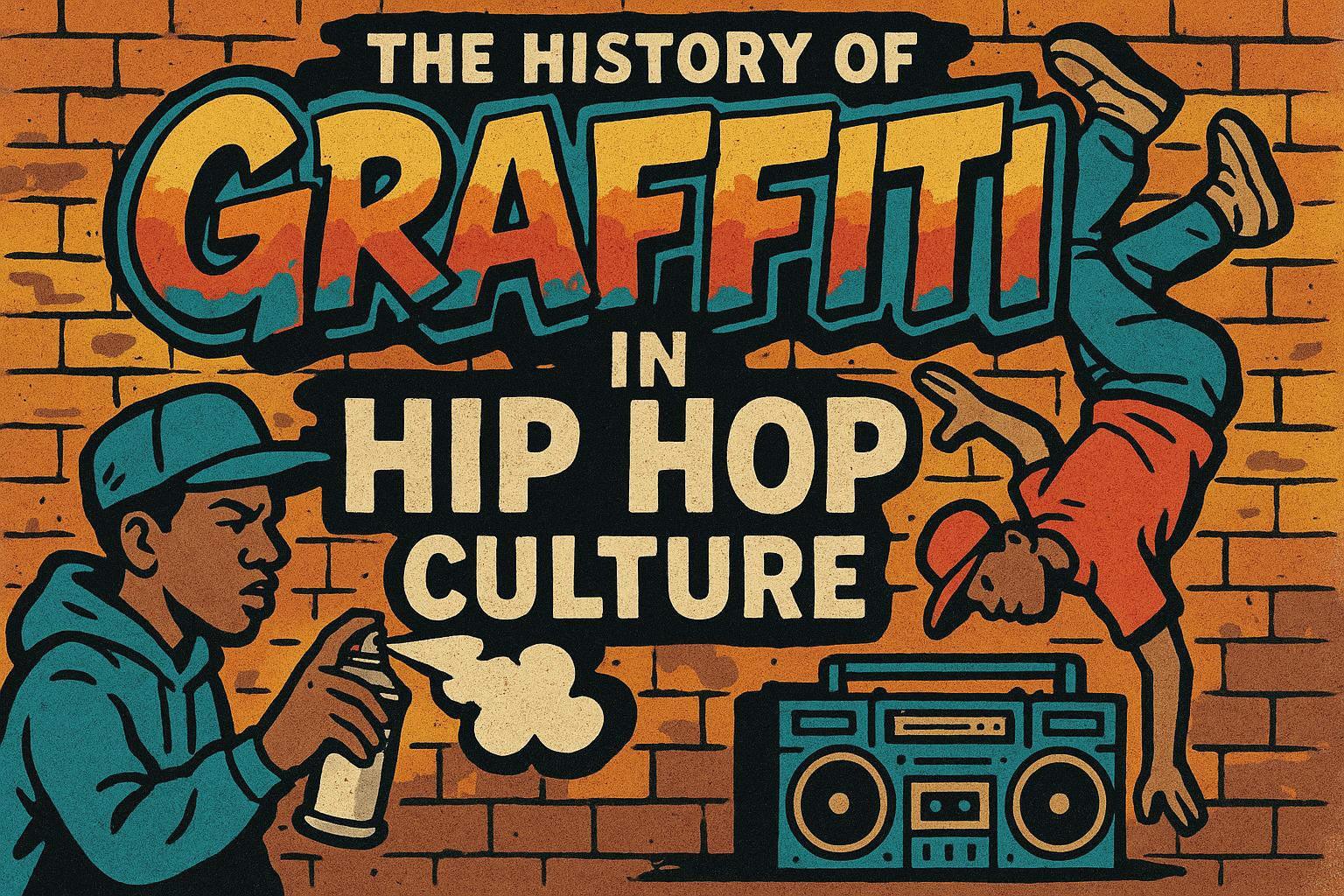
The Origins of Graffiti in Hip Hop Culture
The emergence of graffiti as a prominent element in hip hop culture can be traced back to the late 1960s and early 1970s in New York City. This period marked the rise of a distinctive and bold urban art form primarily created by young artists using spray paint and marker pens. The initial roots of hip hop graffiti can be found in the work of pioneering artists like Taki 183 and Julio 204, who began tagging their names throughout the city, thus establishing a new form of self-expression.
Development and Techniques
Graffiti rapidly evolved with the use of more elaborate styles and techniques. As artists sought to outdo each other, they developed a range of styles such as wildstyle, characterized by its intricate and overlapping letters, and blockbusters, featuring large, block-shaped letters intended to cover space quickly. During this developmental phase, graffiti became more than just tagging; it turned into an art form with its own unique vocabularies and styles.
In its early stages, the techniques employed were relatively simple, involving the use of marker pens and basic spray paint. However, as the art form matured, artists experimented with different nozzles, pressures, and even paint types. This experimentation led to a greater variety in line thickness, texture, and color blending. Artists often honed their skills in less visible locations before showcasing their work in more prominent spaces. This period of experimentation brought about a competitive spirit among artists, as they constantly innovated to leave a distinct mark that could stand out in the bustling urban environment.
The Role of Subway Trains
Subway trains became a popular canvas for graffiti artists as they offered a moving platform that showcased their work to a wider audience. New York City’s subway system, with its extensive network and high visibility, turned into a gallery on wheels. The mobility of subway cars allowed artists to communicate across different neighborhoods, spreading their art and messages throughout the city.
The choice of subway trains was strategic; while rooftops and alleyways were static platforms, the moving nature of trains allowed for a broader dissemination of artwork. Once a train bearing graffiti art left its station, it traveled through various landscapes and neighborhoods, effectively transforming the display from a local exhibition to citywide prominence. This not only expanded the geographic reach of the artists’ messages but also turned their work into a form of urban storytelling that connected diverse parts of the city.
Graffiti as a Voice of the Youth
As a component of hip hop culture, graffiti served as a voice for the youth, especially from marginalized communities. This form of expression was, in many cases, a response to urban blight and socio-economic challenges faced in various neighborhoods. Graffiti provided a public outlet for young artists to assert their identity and communicate their views, blending art with activism.
The areas where graffiti thrived were often those experiencing economic challenges and social changes. Young people found themselves in environments where personal and cultural expression was hindered by socio-economic barriers. In such a context, graffiti emerged as a crucial form of resistance that allowed them to stake a claim over their environment. It was both a method for challenging the status quo and a way to voice concerns, aspirations, and cultural narratives that were often overlooked by mainstream society.
The Intersection With Other Hip Hop Elements
The integration of graffiti with other elements of hip hop culture, such as breakdancing, DJing, and rapping, further solidified its place within this musical and cultural movement. Each element shared a focus on creativity, rebellion, and community. Spaces known as “hip hop jams” often featured multiple forms of artistic expression, and graffiti demonstrated the visual aspect of the culture, complementing the auditory elements.
Graffiti artists collaborated with musicians and dancers, offering visual representations that matched the rhythmic beats and lyrical narratives. At these gatherings, the presence of graffiti served as both backdrop and participant, filling the spaces with its vibrant colors and messages. The intermingling of these art forms created a dynamic cultural scene where the vibrancy of visual art met the energy of performance, thus enriching the overall experience of hip hop culture.
Institutional Response and Regulation
As graffiti gained notoriety and visibility, it also drew attention from city officials and law enforcement. Efforts to regulate and curb graffiti were put into place, viewing it as a form of vandalism. Initiatives included increased policing and the establishment of programs to clean up and paint over graffiti-covered surfaces. Despite these measures, graffiti continued to flourish as a form of resistance and an essential part of hip hop culture.
Municipalities implemented various expensive and extensive clean-up operations, painting over walls and deploying police officers to catch artists in the act. These actions often failed to grasp the cultural and artistic importance of graffiti as an outlet for youth expression and social commentary. Ironically, such opposition often fueled the determination of graffiti artists, who saw their art as a fight against the invisibility and disenfranchisement they faced. This battle between artists and authorities brought to light ongoing tensions between public space usage and individual expression.
The Global Spread and Influence
With the international expansion of hip hop culture during the late 20th century, graffiti also gained global popularity. It became a universal form of expression among youth cultures worldwide, adapting to various urban landscapes and cultural contexts. Artists from different countries brought their own perspectives and styles, broadening the scope and diversity of graffiti within hip hop.
Graffiti’s international journey reflects its versatility and universal appeal. It no longer remains confined to its New York City origins but has been embraced in cities such as Paris, Tokyo, and Sao Paulo, each adapting the form to its local cultural nuances. In Europe, for example, graffiti often intersects with avant-garde art movements, while in Latin America, it intertwines with a rich tradition of muralism and political expression. This globalization of graffiti illustrates not only its aesthetic variety but also its role as a channel for cultural exchange and engagement, connecting disparate communities through a shared artistic language.
This history of graffiti within hip hop culture highlights its role beyond mere artistry; it reflects societal issues, cultural expression, and the enduring spirit of innovation. As an integral part of hip hop culture, graffiti has left an indelible mark on art, society, and the way urban landscapes are perceived globally.