

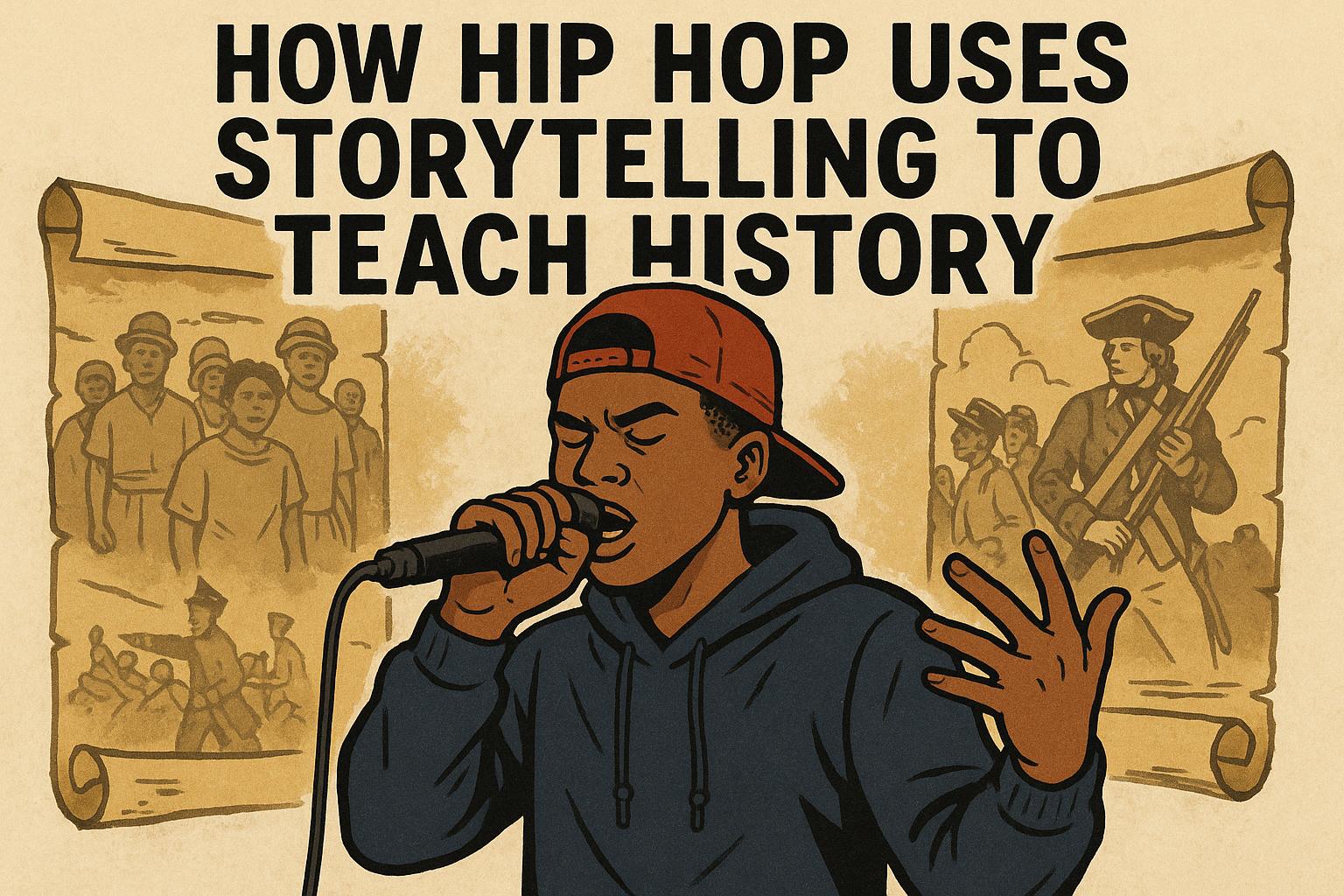
The Art of Storytelling in Hip Hop
Hip hop has long been celebrated not just as a musical genre but as a cultural movement. It is a platform where artists express personal and collective narratives, making storytelling an essential component. Through compelling narratives, hip hop artists shed light on historical events, social issues, and cultural movements, creating an audio tapestry that informs and educates.
Relating Personal Histories to Broader Narratives
In hip hop, many artists use their personal experiences to reflect on broader historical contexts. For instance, rappers often highlight the impact of systemic inequalities that resonate with the history of various marginalized communities. By sharing personal stories that are deeply intertwined with historical events, they create a bridge between individual experiences and collective memory. A rapper’s narrative might begin with a childhood story explaining their upbringing, followed by a discussion of how community violence impacted their life. This not only exposes listeners to one person’s story but also allows them to see connections to larger societal patterns.
The particular experience of growing up in economically disadvantaged neighborhoods is a common theme in hip hop’s storytelling tradition. Artists often detail struggles with poverty, lack of access to quality education, and violence, along with their attempts to overcome these challenges. This personalizes the historical narrative of urban poverty and serves to humanize statistics and abstract concepts. Listeners gain insight into the factors influencing these environments’ development and persistence over the decades.
Highlighting Historical Events
Hip hop is effective in presenting historical events through the lens of those who have lived them or who are directly connected to those who have. Tracks often delve into events like the civil rights movement, political struggles, and more recent events such as the 1992 Los Angeles riots. By doing so, artists offer audiences an unfiltered perspective on crucial episodes in history that may not always be fully covered in traditional educational settings. Through lyrics, hip hop artists can bring past events into the current dialogue, linking history and contemporary experiences.
Artists often act as modern-day griots, oral historians responsible for preserving memories and passed-down legends of the community. This tradition is especially important in cultures where formal archives are rare or incomplete. Hip hop thus becomes an enduring vessel for cultural history. Some tracks summarize entire epochs or pivotal moments in just a few minutes, capturing their essence and emotional gravity. This can serve as a primary introduction to unfamiliar historical events for some listeners, potentially inspiring a desire to learn more through other, more conventional sources.
The Role of Sampling
One of the distinct features of hip hop is its use of sampling, where artists incorporate fragments of existing music into new songs. This technique is not just a musical method but serves as a form of historical commentary. By sampling speeches, iconic tracks, or culturally significant soundbites, artists encapsulate moments in time, anchoring their stories in a recognizable reality that speaks volumes. Sampling allows newer generations to tap into older messages, providing context and continuity within the music itself.
Sampling acts as a multi-layered form of storytelling, where past and present collide and interact. It can be used to draw attention to the cyclical nature of social struggles or illustrate how past philosophies and beliefs resonate with today’s issues. This combination of old and new sounds creates a unique narrative effect, inviting listeners to consider how sampled content and the new lyrical material relate and enhance each other.
Connecting Generations
An important aspect of hip hop storytelling is its ability to connect older generations with the younger ones. As artists reference historical figures, events, or previous cultural movements, they create a dialogue that spans different age groups. This cross-generational conversation fosters a shared understanding and appreciation of history, encouraging critical thinking and discussions about the past and its influence on the present.
This generational bridge-building can be observed in collaborations between older artists and younger ones, where each may bring their unique stylistic and thematic contributions to a joint project. Together, they offer diverse perspectives on common themes and issues. The partnership produces not only fresh interpretations but also serves to remind audiences of hip hop’s evolving nature while maintaining its cultural heritage.
Hip Hop as an Educational Tool
The educational potential of hip hop narratives has been recognized by some educators who incorporate the genre into curricula to engage students in learning about history. By analyzing lyrics alongside traditional historical texts, students can gain a more rounded understanding of the events that have shaped the world they live in. This approach utilizes hip hop’s natural appeal to younger audiences to enhance their educational experience.
Hip hop entered classrooms initially through informal channels, mostly as supplementary content, but its educational efficacy is gaining recognition. Educators who embrace hip hop leverage its relatability and cultural relevance to maintain student interest and engagement. Furthermore, discussing the social and historical contexts present in hip hop songs allows for a nuanced exploration of perspectives that textbooks often lack.
The Future of Historical Storytelling in Hip Hop
As hip hop continues to evolve, its role as a storytelling medium remains significant. Artists are likely to continue weaving historical narratives into their music, offering unique insights into past events while addressing contemporary social issues. The potential for hip hop to educate and inform remains robust, making it a vital tool for both historical reflection and cultural commentary.
In conclusion, hip hop’s dynamic storytelling capabilities enrich cultural dialogue and historical understanding. By bridging generational divides, highlighting historical moments, and serving as an educational tool, it supports a broader and more inclusive narrative. As future generations of artists rise, they will continue to mold and shape hip hop’s narrative power, ensuring the preservation and evolution of stories that define and redefine community and identity.